What Is Open Banking and How Does It Benefit UK Consumers?

Open Banking Simply Explained
Open Banking is a regulatory framework that lets you securely share your financial data with third-party apps — but only with your explicit permission. Introduced in the UK in 2018 following a Competition and Markets Authority investigation, it has transformed how consumers manage money.
How It Works
Banks provide secure APIs allowing authorised third-party providers to access account data. When you grant permission, the provider can read your transactions, check your balance, or initiate payments — within whatever access you've approved. All providers must be FCA-authorised. You can revoke access any time through your bank's settings.
Real-World Benefits
- Better budgeting: Apps like Emma connect to all your accounts for a complete financial picture
- Faster mortgages: Lenders verify income automatically, cutting paperwork
- Better credit access: People with thin credit files can show real spending patterns
- Instant verification: Pay bills without entering card details manually
Is It Safe?
Third parties never see your banking password — they receive a secure token for only the data you've approved. If fraud occurs through an authorised Open Banking connection, your bank is liable. Always verify an app is FCA-registered at register.fca.org.uk before granting access.
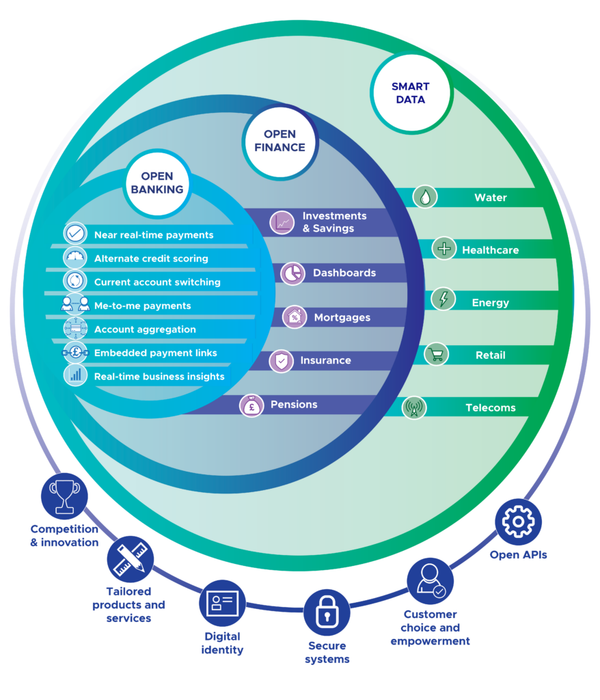
What's Next: Open Finance
The UK government is expanding the concept to include mortgages, pensions, investments, and insurance — enabling even more powerful financial planning tools and more competitive pricing across products.