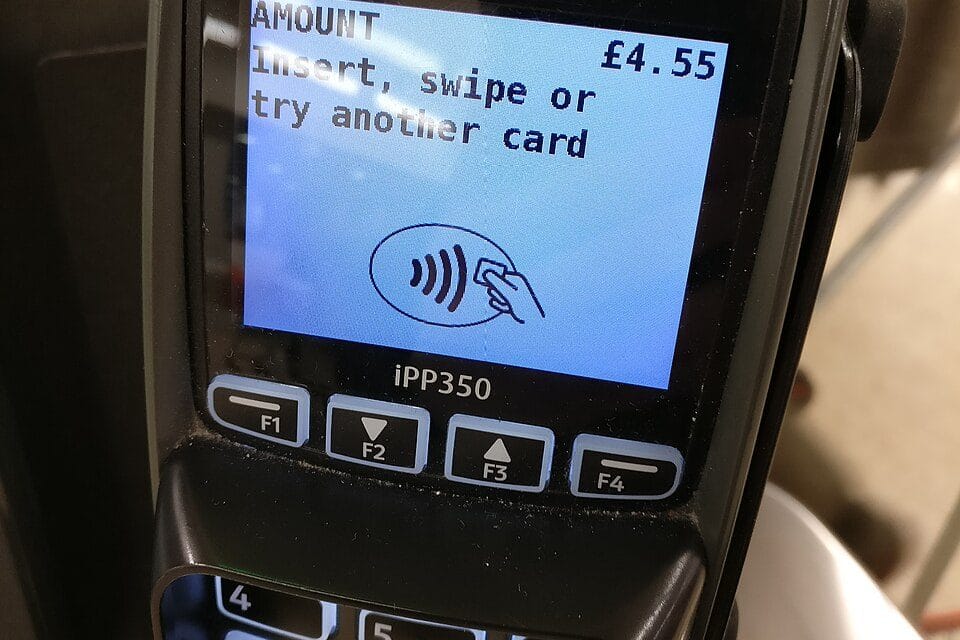
Tap a card for £150 at a Tesco self-checkout this week and the terminal will still ask for your PIN, exactly as it would have done last summer. That's despite the fact that the rule forcing it to do so, in theory, disappeared in March. The Financial Conduct Authority removed the mandatory £100 single-transaction contactless cap under Handbook Notice 136, published on 19 March 2026, handing banks and card schemes the freedom to set their own limits, allow unlimited contactless payments without a PIN, or scrap contactless altogether if their fraud controls stack up. Four months on, almost nobody has noticed, because almost nobody has changed anything.
A regulatory change built for banks, not for Saturday shoppers
The FCA has been careful about how it frames this. David Geale, the regulator's executive director of payments and digital finance, said contactless remains people's favoured way to pay and that the FCA does not expect any immediate change to the current £100 limit — any future adjustments, he added, will be made carefully and only where strong security and fraud controls remain in place. That's a regulator giving industry a longer leash while making clear it isn't yanking anyone off the current one. Consumer protections haven't moved an inch either way: refunds are still required for unauthorised fraud no matter what limit a bank sets on your card, so the safety net under contactless spending is unchanged by this notice.
How a £10 tap-and-go limit became £100
So why keep the £100 figure at all, if the rule that forced it has already gone?
Because raising a payment limit is one of those decisions every bank would rather someone else made first — and £100 has only ever moved in one direction since contactless launched on UK cards. The limit started at £10 in 2007, when contactless first appeared and most people didn't trust it with more than a coffee. It went to £15 in 2010, then £20 in 2012. The jump to £30 in 2015 was the one that actually mattered for daily shopping, since it finally covered a mid-sized supermarket top-up without a PIN. Then came £45 in 2020, pushed through in a matter of weeks specifically to cut down on people jabbing shared card readers during the pandemic, and finally £100 in October 2021, where it has sat for nearly five years now. Six rises in fourteen years is not a regulator that moves quickly, and there's no reason to expect this round to be any different, whatever the March notice technically permits.
What Handbook Notice 136 actually unlocks
Single-transaction limits
Under the new rules, a card issuer with sufficiently robust fraud monitoring can set its own single-transaction contactless ceiling above £100, allow an unlimited tap amount entirely, or — for firms that would rather not deal with any of it — switch contactless off for a card altogether. None of that is compulsory, and the FCA's own guidance signals it expects most providers to hold at £100 "for the foreseeable future." Barclays, Lloyds and NatWest have all indicated no plans to move in 2026.
Cumulative caps and the five-tap rule
The less-discussed half of the change touches cumulative controls — the running total a terminal tracks across several taps before it forces a PIN, typically £300 or five consecutive contactless payments, whichever comes first. Those thresholds are under the same review as the single-transaction cap, and a bank could, in principle, raise or scrap the five-tap rule independently of the £100 figure. This is arguably the more useful lever for anyone doing a weekly shop across two or three separate purchases in one visit, and it's the one worth watching over the next year rather than the headline number everyone quotes.
Your phone got here first, and nobody made a fuss
Here's the detail that makes the whole £100 debate feel slightly beside the point: Apple Pay, Google Pay and Samsung Pay have never had a contactless limit in the UK, and nobody had to pass a rule to allow it. When you tap your phone or watch, the device's own Face ID, fingerprint or passcode unlock stands in for the PIN, so the terminal treats every wallet payment as already authenticated regardless of amount. The FCA has explicitly framed its March change as bringing physical cards in line with wallets, not the other way round — an admission that the regulatory catch-up has been running in the wrong direction for years.
That gap has quietly reshaped how Britons pay without much fanfare. Mobile wallet registration among UK adults reached 57% in 2024, up from 42% the year before, and 88% of 16-to-24-year-olds now have one set up on their phone. Even the 65-plus age group nearly doubled its adoption, from 14% to 25% over the same period — hardly a demographic known for rushing into new payment technology. Digital wallets' share of UK transactions rose from a marginal 8% in 2019 to 29% in 2023, and 40% of UK online purchases in 2024 went through a wallet rather than a typed-in card number, a figure forecast to hit 68% by 2030. Apple Pay dominates the point of sale here specifically: 67% of UK shoppers used it in 2025, and 64% of people with more than one wallet installed still reach for Apple's over Google Pay (37%) or PayPal (36%) when they're actually standing at a till. PayPal's place in that ranking is worth a second look, though — a good chunk of that 36% comes from typed-in checkout flows rather than anything resembling a contactless tap, so "digital wallet" in the UK context covers more ground than the phone-on-terminal habit this article is really about.
What this means for your next big tap
If you regularly buy things above £100 with a tap — a supermarket shop for a dinner party, a round of drinks, a train ticket bought last-minute — move that spending to your phone's wallet rather than waiting on your bank to lift the card limit. Nearly every major UK issuer has signalled it's holding at £100 for now, so your physical card isn't going anywhere near a higher ceiling this year, while your phone already has no ceiling at all and never asks you to justify it.
That's not an unqualified upgrade, mind. Putting more of your spending behind a phone unlock concentrates risk in a different place: lose an unlocked phone, or let a partner's fingerprint stay enrolled on a device you've since stopped sharing passwords with, and you've handed over a payment method with no built-in transaction ceiling at all. A stolen, unlocked card at least tops out at £100 a tap before someone has to find a PIN. A stolen, unlocked phone doesn't.
For small businesses running the till
Retailers don't get to opt into higher limits on their own — that decision sits with the customer's card issuer and the acquiring bank behind the terminal, not the shop taking the payment. What a small business owner can control is fraud exposure on their own side: contactless disputes still route through chargeback rules that haven't shifted with this notice, so a market stall or independent café accepting more high-value taps needs to check with its payment provider whether its existing fraud tooling is actually rated for anything above £100 — don't assume the terminal software will simply allow it the day a bank raises the cap.
What actually changes from here
Watch the cumulative cap before the single-transaction one — a bank quietly raising the £300 running total, or the five-tap threshold, will affect more people's weekly shopping than any bank announcing a new £150 or £200 single limit ever will. And keep an eye on which issuer moves first: whoever breaks from £100 becomes the one every comparison site writes about, which means the incentive to be first is real even if none of the big four are choosing it yet.