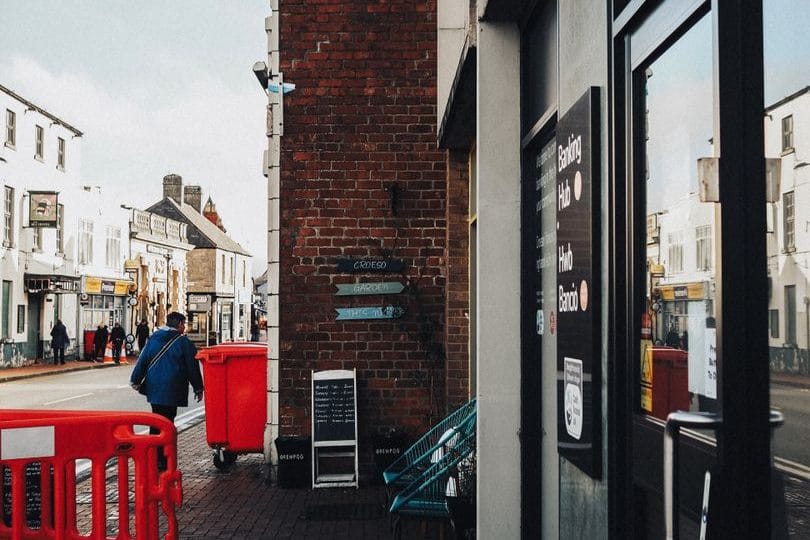
Walk into Ammanford, Machynlleth or dozens of other UK towns today and the building where the last bank branch used to stand is now something else entirely — a Banking Hub, run jointly by every major bank that used to compete against each other on the same high street, staffed by Post Office counter services on weekdays and by rotating specialists from Barclays, Lloyds, NatWest, HSBC and Santander on set days of the week. It's an odd model on paper: direct competitors sharing a single counter. In practice it's become the main answer to a problem that access-to-cash campaigners spent years warning about, and the rollout has picked up noticeably through 2026.
Why we got here
UK bank branch closures ran into the thousands over the past decade, driven by the shift to mobile banking and the cost of maintaining a physical counter that fewer customers were using each year. That made sense from inside a bank's spreadsheet and made considerably less sense to an older customer, a small business needing to pay in cash takings, or anyone in a rural area where the nearest remaining branch was now a twenty-minute drive away. LINK, the organisation that runs the UK's cash machine network, was given a formal role in recommending where a Banking Hub should go whenever a community loses its last branch — a recommendation now backed by rules that make it considerably harder for banks to simply walk away and leave a gap. That formal role is relatively recent in banking terms, and it marks a genuine shift from the previous decade, when a branch closure announcement typically came with little more than a short consultation period and a leaflet directing customers to online banking.
What a Banking Hub actually offers
Every Banking Hub provides basic cash and everyday banking services through a Post Office-operated counter, available to customers of any bank, on every day it's open — deposits, withdrawals, balance checks, and bill payments work the same way they would at a Post Office counter today. What makes it different from a Post Office is the second half of the model: a private consultation room where staff from a different major bank sit on a rotating schedule, often one day a week each, to help with anything a counter transaction can't cover — a mortgage query, a fraud concern, or setting up a new account. The rota is published locally and posted at the hub itself, and it's worth checking before a visit, because turning up on the wrong day means the counter services are available but your own bank's specialist isn't. Hub opening hours generally mirror a typical high-street branch's, often five or six days a week, which is itself an improvement on some of the reduced-hours branches that existed in their final year or two before closure.
The gap that's still there
Coverage has expanded well past the first hundred sites and the programme's stated ambition now runs into the several hundreds nationally, but the process only starts once a town has already lost its last branch — it doesn't stop a closure from happening, and there's typically a gap of weeks or months between the branch shutting and the hub opening its doors. That gap matters most for the people the whole scheme is meant to help, because someone who relies on cash for weekly shopping doesn't have a few months of flexibility to wait it out.
Don't assume a hub is guaranteed just because a branch closes nearby, either.
The recommendation process weighs footfall, the distance to the next-nearest cash access point, and the demographics of the local area, and a town can lose its last branch without meeting the threshold for a dedicated hub if there's a Post Office or another cash point within what's judged an acceptable distance. Anyone campaigning locally for a hub is better off engaging directly with LINK's assessment process than assuming the closure alone guarantees a replacement.
What this means if your local branch has already gone
Check LINK's cash access tool online using your postcode — it shows what's already been recommended or opened in your area, not just what exists today, and recommendations often precede the actual opening by several months. If nothing has been recommended and you think your area genuinely needs one, LINK accepts direct representations from residents and local councils, and a documented case citing the actual distance to the next cash point tends to carry more weight than a general complaint about closures. In the meantime, most towns retain at least a Post Office counter, which handles day-to-day cash transactions for any UK bank account even without a dedicated hub next door. It's also worth telling elderly or vulnerable relatives specifically about the specialist rota days rather than assuming they've seen a leaflet — a surprising number of people who'd benefit most from the private consultation room don't realise it exists at all, and simply use the counter side for withdrawals without ever booking the more useful appointment slot.
Business banking is where the gaps still show
Banking Hubs were designed primarily around personal banking needs, and small business owners have found the model less complete than residents hoping for basic cash access. Paying in a day's takings works fine through the Post Office counter side, which handles business banking deposits for most major banks in broadly the same way it handles personal ones. What's harder to replicate is the kind of relationship banking a small business used to get from a local branch manager who knew the business — a same-day decision on a short-term overdraft extension, or a conversation about a business loan that doesn't start from scratch with a call centre reading from a script. The rotating specialist days at a hub help here, but only on the specific day your bank's specialist is actually present, which for a business needing a faster answer than "come back Thursday" can still feel like a downgrade from what a full branch offered.
Where the rollout goes from here
The programme's ambition has grown considerably since the first hubs opened as a pilot — the target now sits at several hundred sites nationally, up from the original, much smaller pilot figure, and the pace of new openings has picked up as the assessment and funding process between LINK, the participating banks and Cash Access UK has become more routine. Towns including Ammanford, Machynlleth, Rochford and Cottingham have already gone through the full cycle from branch closure to hub opening, and that track record is now being used to streamline the process for newer applications rather than treating each one as a bespoke project. Expect the rollout to keep accelerating through the rest of this year, particularly in areas where the last bank branch closes and campaigners are already primed to push for a hub immediately rather than waiting to see if one gets offered.
How a hub actually gets approved
The assessment behind every Banking Hub recommendation weighs a specific set of factors rather than responding purely to public pressure: the distance to the next-nearest free cash access point, the number of businesses in the area still reliant on paying in cash takings, and footfall data showing how many people were actually using the branch before it closed. A town with a well-used Post Office already offering full banking services close by is less likely to be prioritised than one where the nearest alternative is a genuine drive away, which is precisely why some closures generate a hub within months and others don't generate one at all. Cashback without purchase — withdrawing money at a shop till without needing to buy anything — has also expanded as a supplementary option in areas that don't meet the threshold for a full hub, though it depends on individual retailers opting in and isn't a guaranteed fallback in the way a Post Office counter is.
What to do this month
If you or someone you look after relies on cash and a local branch has closed in the past year, check the LINK website today rather than waiting for a leaflet through the door — hub openings aren't always well advertised locally beyond a small sign in the window during the final weeks of construction. And if you're already near a hub but haven't used the specialist rota side of it, it's worth booking a slot for anything more involved than a cash withdrawal — the private room genuinely handles account-specific problems that a counter transaction was never designed for.