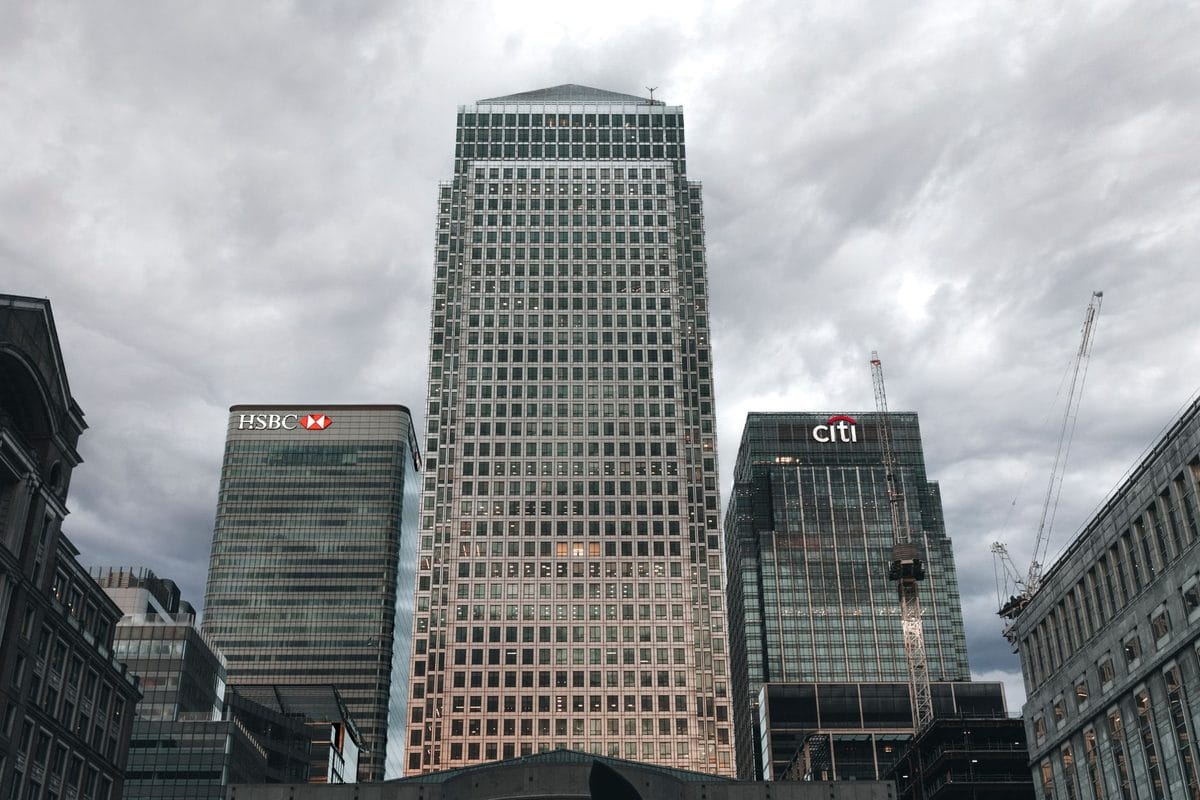
Walk down most UK high streets in 2026 and you'll pass at least one bank branch with a closure notice taped to the window, and possibly two or three. Lloyds Banking Group alone is shutting or has already shut 40 Lloyds, Halifax and Bank of Scotland branches this year — 17 of them Bank of Scotland, 15 Halifax. Across the four biggest closers, 73 branches have confirmed closure dates and a further 29 have announced they're going without yet fixing a final day, bringing the 2026 total to 102 confirmed and pending closures at Lloyds, NatWest, Santander and Halifax combined.
The scale nobody quite registered until now
This isn't a single bad year. Since a voluntary industry agreement to assess closure impact began in February 2022, 2,065 branches have shut or announced plans to shut — an average of more than one every single day for four years running. Banks attribute it, consistently and not entirely unfairly, to a genuine shift in how people bank: the number of people walking into a branch to pay a cheque or check a balance has fallen sharply as mobile and online banking became the default rather than the exception. But “the customers moved online” doesn't help the pensioner who still gets paid in cash, the small trader who needs to deposit a till float, or the person who simply doesn't trust — or can't use — a banking app.
Why this is different from the last decade of closures
Branch closures aren't new; they've been happening since well before 2022. What's changed is the government response. Treasury has confirmed it will launch an independent review specifically examining how closures are affecting communities, with the final report due by October 2026 — and it's paired that review with an explicit warning that new legislative powers could follow if the evidence supports it. That's a sharper stance than the industry's voluntary agreement represented, and it signals that the current pace of closures, absent a credible alternative on the ground, is no longer being treated as an acceptable trade-off for digital convenience.
The alternative on the ground is banking hubs, and they've scaled up faster than most people outside the industry have noticed. As of August 2025, 178 hubs had opened across the UK; Cash Access UK, the body running the rollout, says that figure has since passed 200, with 100 opened in 2025 alone. A new five-year agreement between the Post Office and Cash Access UK began in January 2026, formalising the Post Office's role in reaching a government target of 350 hubs by the end of the current Parliament.
What a banking hub actually offers — and what it doesn't
A hub isn't a branch with a different sign on the door. It's a shared space, typically staffed by Post Office personnel, where personal and business customers of any bank signed up to the Banking Framework Agreement can carry out basic services: deposits, withdrawals, and bill payments. Most hubs also run a private room for more complex enquiries, with a “community banker” from a specific bank rotating in on set days each week — so if you need to discuss a mortgage or a fraud case with your own bank rather than a generic Post Office counter, that conversation happens on a schedule, not on demand.
Cash Access UK reports that hubs handle around 150 customer transactions a day on average and claims roughly 95% of everyday banking needs can be met through them. That last figure is doing a lot of work, and it's worth being sceptical of it rather than repeating it uncritically: “95% of needs” describes transaction types, not distance travelled or how it actually feels to lose the branch you'd used for twenty years. A hub thirty minutes away by bus is not equivalent to the branch that used to be a five-minute walk, even if both technically let you deposit a cheque.
The gap that's still real
Critics are right that many communities losing a branch this year won't see a hub appear on the same timeline — hubs are typically approved only after a formal assessment following a closure announcement, which means there's a lag, sometimes a long one, between a branch shutting and a hub opening to replace it. In that gap, cash-dependent customers are, in practice, left without face-to-face banking at all. The House of Lords Library has specifically flagged the impact on rural communities, where the nearest alternative branch or hub can mean a round trip that simply isn't realistic for someone without a car.
What to do if your branch is on the closure list
- Check the LINK network's branch and hub finder before your local branch shuts — it shows confirmed and planned hub locations, which sometimes lags behind closure announcements but is more current than most banks' own closure pages.
- If you rely on cash regularly, ask your bank directly whether a hub is planned for your area and on what timeline; branches are legally required to notify Treasury and consult on closures, but the process doesn't guarantee a same-timeline replacement.
- For small businesses depositing cash takings, check whether your nearest Post Office branch (not just a dedicated hub) can process business banking — many already can, ahead of a hub actually opening nearby.
- If you're supporting an older relative who's struggled since a local closure, the community banker rota at the nearest hub is worth checking specifically — it's the closest thing to the old in-branch relationship that the new model offers.
None of this reverses the underlying trend. Branches are closing at roughly the same pace they have been for four years, and nothing in the current review process suggests that's about to stop. What's changed in 2026 is that the government is finally treating the replacement infrastructure as a policy question rather than something the industry sorts out on its own timeline — and whether that October report leads to firmer rules, or just another round of voluntary commitments, is the thing actually worth watching.